

Reverse osmosis (RO) membranes are the heart of many water treatment systems, offering high - quality water purification for various applications, from desalination of seawater to purification of industrial wastewater. However, one of the most common and challenging problems faced in RO systems is membrane scaling. Scaling occurs when sparingly soluble salts in the feed water precipitate and form a solid layer on the surface of the RO membrane. This can reduce the membrane's efficiency, increase energy consumption, and ultimately lead to membrane damage. As a leading reverse osmosis membranes supplier, we understand the importance of preventing scaling to ensure the long - term performance and reliability of RO systems. In this blog, we will explore several effective strategies to prevent scaling on reverse osmosis membranes.
1. Pretreatment of Feed Water
The first line of defense against membrane scaling is proper feed water pretreatment. This step aims to remove or reduce the concentration of scaling - forming substances in the water before it enters the RO system.
- Filtration: The initial step in pretreatment usually involves filtration to remove suspended solids, debris, and large particles from the feed water. This can be achieved through various filtration methods, such as multimedia filtration, cartridge filtration, and microfiltration (MF) or ultrafiltration (UF). MF or UF membranes can effectively remove particles, colloids, and some microorganisms, which helps prevent fouling and scaling on the RO membrane surface. For example, if the feed water contains a high level of silt or clay, a multimedia filter can be used to remove these larger particles before further treatment.
- Softening: Water softening is a crucial pretreatment process for reducing the concentration of divalent cations, such as calcium and magnesium, which are the main components of scale. Ion - exchange softeners are commonly used to replace calcium and magnesium ions with sodium ions. This process significantly reduces the hardness of the water and minimizes the risk of calcium carbonate and calcium sulfate scaling on the RO membrane. For instance, in areas where the groundwater has a high hardness level, an ion - exchange softener installed upstream of the RO system can prevent excessive scale formation.
- Acidification: Adding acid to the feed water is another effective way to control scaling, especially for calcium carbonate scaling. By lowering the pH of the water, the solubility of calcium carbonate increases, preventing its precipitation on the membrane surface. Sulfuric acid or hydrochloric acid is commonly used for this purpose. However, careful control of the acid dosage is required to avoid membrane damage due to excessive acidity. If the alkalinity of the feed water is high, adjusting the pH to an appropriate level (usually around 6 - 6.5) can effectively prevent calcium carbonate scaling.
2. Use of Antiscalants
Antiscalants are chemical additives that are specifically designed to inhibit the precipitation and growth of scale crystals on the RO membrane surface. These additives work by interfering with the crystallization process of sparingly soluble salts, such as calcium carbonate, calcium sulfate, barium sulfate, and strontium sulfate.
- Mechanism of Action: Antiscalants can adsorb onto the surface of scale nuclei, preventing them from growing into larger crystals. They can also disperse the scale particles in the water, keeping them in suspension and preventing them from adhering to the membrane surface. Some antiscalants can modify the crystal structure of the scale, making it more soluble and less likely to deposit on the membrane.
- Selection of Antiscalants: The choice of antiscalant depends on several factors, including the composition of the feed water, the operating conditions of the RO system, and the type of membrane used. Different antiscalants are designed to be effective against specific types of scale. As a reverse osmosis membranes supplier, we can provide professional advice on the selection of the most suitable antiscalant for your RO system. For example, if the feed water contains a high concentration of sulfate ions, an antiscalant specifically formulated to prevent sulfate scaling should be used.
3. Optimization of RO System Operating Conditions
Proper operation and optimization of the RO system can also play a significant role in preventing membrane scaling.
- Recovery Rate: The recovery rate of an RO system refers to the percentage of the feed water that is converted into permeate. A higher recovery rate means that a larger proportion of the feed water is being treated, but it also increases the concentration of salts in the concentrate stream. If the concentration of scaling - forming salts exceeds their solubility limits at a high recovery rate, scaling is more likely to occur. Therefore, it is important to choose an appropriate recovery rate based on the feed water quality and the type of membrane used. For most RO systems, a recovery rate of 75% - 85% is commonly used to balance the water production and the risk of scaling.
- Cross - Flow Velocity: Maintaining an appropriate cross - flow velocity across the membrane surface is essential for preventing scale deposition. A higher cross - flow velocity can help to sweep the scale particles away from the membrane surface and reduce the concentration polarization effect. Concentration polarization occurs when the concentration of salts near the membrane surface is much higher than in the bulk feed water, which can increase the likelihood of scaling. By increasing the cross - flow velocity, the concentration polarization can be minimized, and the risk of scaling can be reduced.
- Pressure and Temperature: The operating pressure and temperature of the RO system also affect the solubility of salts and the performance of the membrane. Generally, a higher pressure can increase the water flux through the membrane, but it may also increase the concentration of salts in the concentrate stream. On the other hand, temperature can affect the viscosity of water and the solubility of salts. As a rule of thumb, the solubility of most salts increases with increasing temperature. Therefore, maintaining a stable operating pressure and temperature within the recommended range of the membrane can help prevent scaling.
4. Regular Maintenance and Monitoring
Regular maintenance and monitoring of the RO system are crucial for early detection and prevention of scaling.

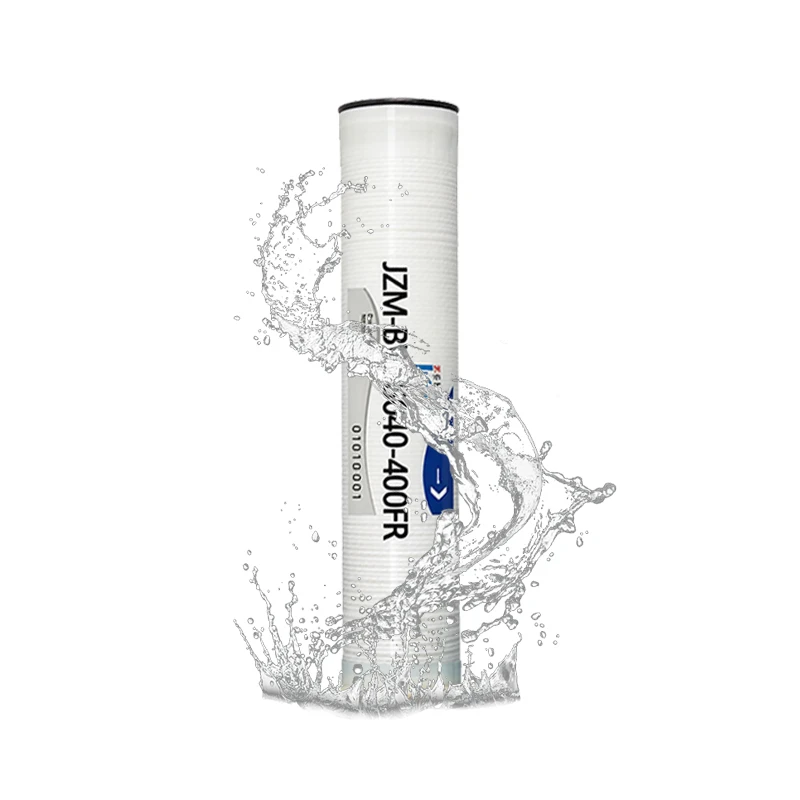
- Membrane Cleaning: Periodic membrane cleaning is necessary to remove any accumulated scale and fouling from the membrane surface. There are different types of cleaning methods, including physical cleaning (such as backwashing) and chemical cleaning. Chemical cleaning agents should be selected carefully to avoid damaging the membrane. For example, if calcium carbonate scale is detected on the membrane, an acid - based cleaning solution can be used to dissolve the scale.
- Monitoring of Water Quality and System Performance: Continuous monitoring of the feed water quality, permeate quality, and system performance parameters, such as pressure drop, water flux, and salt rejection, is essential for detecting any signs of scaling or fouling. By analyzing these data, any changes in the system's performance can be detected early, and appropriate measures can be taken to prevent further scaling. For instance, if the pressure drop across the membrane increases suddenly, it may indicate the presence of scale or fouling on the membrane surface.
As a reliable reverse osmosis membranes supplier, we offer a wide range of high - quality RO membranes, including Seawater Ro Membrane, HD Ro Membrane, Low Energy Ro Membrane, High Rejection Ro Membrane, and Low Pressure Ro Membrane. Our membranes are designed to provide excellent performance and durability, and we can also offer comprehensive technical support and solutions to help you prevent scaling and ensure the optimal operation of your RO system.
If you are interested in purchasing our reverse osmosis membranes or need more information about scaling prevention, please feel free to contact us for further discussions and procurement negotiations. We are committed to providing you with the best products and services to meet your water treatment needs.
References
- Cheryan, M. (1998). Ultrafiltration and Microfiltration Handbook. Technomic Publ Co.
- Rautenbach, R., & Albrecht, R. (1989). Membrane Processes: Principles and Applications. John Wiley & Sons.
- Mulder, M. (1996). Basic Principles of Membrane Technology. Kluwer Academic Publishers.